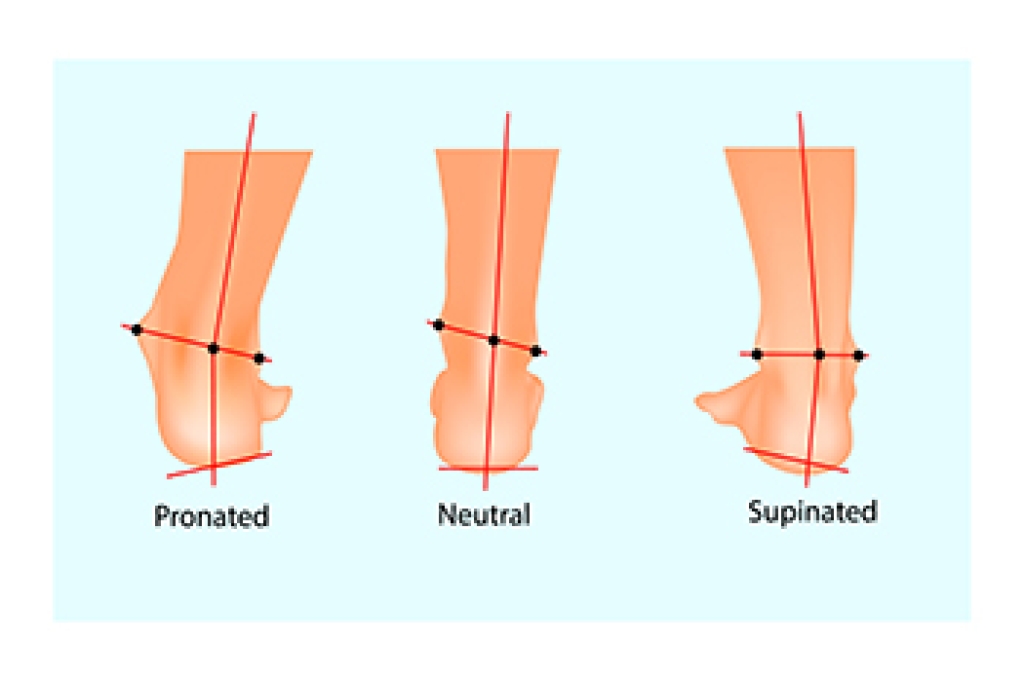
Supination and pronation are natural movements of the feet that occur during walking and running. Pronation refers to the inward rolling of the foot as it strikes the ground, helping absorb shock and distribute weight. Supination, also known as under-pronation, is the outward rolling of the foot, which places more pressure on the outer edge. Both motions are essential for balance and efficient movement. However, when either becomes excessive, it can lead to poor biomechanics and increased strain on the feet, ankles, and lower limbs.
Symptoms of excessive pronation often include flat foot posture, inward ankle rolling, and pain along the arch or inner ankle. Individuals may also experience knee or hip discomfort due to misalignment. Excessive supination typically presents with high arches, limited shock absorption, and pain along the outer edge of the foot or ankle. Repeated stress can lead to conditions such as ankle instability, stress fractures, or tendon irritation. These symptoms can worsen over time without proper support or correction.
Several risk factors contribute to abnormal foot mechanics. Genetics play a significant role, as inherited foot structure can influence arch height and alignment. Wearing incorrect footwear that lacks support or cushioning can worsen both pronation and supination. Bodily misalignment, including uneven leg length or poor posture, can also affect how weight is distributed through the feet. High impact activities and prolonged standing may increase stress on already imbalanced foot structures, leading to discomfort and injury.
Managing excessive supination or pronation involves improving support and correcting alignment. Wearing properly fitted, supportive footwear is essential for maintaining stability and reducing strain. Custom orthotics can help guide the foot into a more neutral position and improve overall biomechanics. Strengthening and stretching exercises may also support better movement patterns. If excessive supination or pronation of the feet is affecting your comfort or mobility, it is suggested that you consult a podiatrist for effective relief and management tips.
If you have any concerns about your feet, contact Nadia Sadeghi, DPM from Lincoln Park Foot and Ankle Specialists. Our doctor can provide the care you need to keep you pain-free and on your feet.
Biomechanics in Podiatry
Podiatric biomechanics is a particular sector of specialty podiatry with licensed practitioners who are trained to diagnose and treat conditions affecting the foot, ankle and lower leg. Biomechanics deals with the forces that act against the body, causing an interference with the biological structures. It focuses on the movement of the ankle, the foot and the forces that interact with them.
A History of Biomechanics
- Biomechanics dates back to the BC era in Egypt where evidence of professional foot care has been recorded.
- In 1974, biomechanics gained a higher profile from the studies of Merton Root, who claimed that by changing or controlling the forces between the ankle and the foot, corrections or conditions could be implemented to gain strength and coordination in the area.
Modern technological improvements are based on past theories and therapeutic processes that provide a better understanding of podiatric concepts for biomechanics. Computers can provide accurate information about the forces and patterns of the feet and lower legs.
Understanding biomechanics of the feet can help improve and eliminate pain, stopping further stress to the foot.
If you have any questions please feel free to contact our office located in Chicago, IL . We offer the newest diagnostic and treatment technologies for all your foot and ankle needs.
